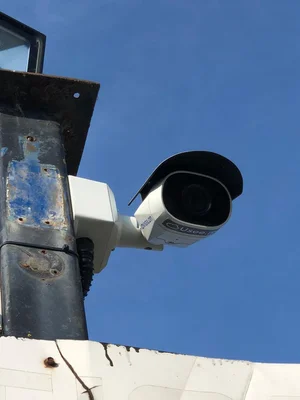
📰 Why CCTV is No Longer Enough for High-Net-Worth Security
Introduction
For many years, CCTV was considered the cornerstone of residential security.
Install cameras, record activity, and review footage if something happened.
That model no longer reflects the reality of risk in high-value environments.
Today, high-net-worth residences, estates, and private properties require a more structured approach—one that moves beyond passive recording to active protection, intelligent detection, and controlled response.
The Problem with Traditional CCTV

CCTV systems are, by design, reactive.
They:
Record events after they occur
Rely on someone reviewing footage
Provide limited real-time intervention
In many cases, footage is only accessed after an incident has already taken place.
For high-net-worth individuals, this creates a critical gap:
The system documents the breach—but does not prevent it.
Changing Risk in High-Value Environments
The risk profile for high-net-worth properties has evolved.
Modern threats include:
Targeted burglary
Organised intrusion
Reconnaissance over time
Exploitation of predictable routines
These are not opportunistic events—they are planned and deliberate.
As a result, security systems must:
Detect early
interpret behaviour
respond before escalation
From Surveillance to System Architecture
Effective security is no longer defined by the number of cameras installed.
It is defined by how systems work together.
A modern approach typically includes three layers:
Monitoring -Our Praetorian Service
Real-time visibility of the environment, with the ability to respond immediately to events.
Detection - Our Aegis Service
Intelligent analysis of activity, identifying unusual behaviour, movement patterns, and potential threats.
Access Control -Our Custodian Service
Controlled management of entry and movement across the property, ensuring only authorised access.
Together, these layers create a system that:
observes
interprets
controls
—not just records.
The Role of Discretion
For private clients, security must not only be effective—it must be discreet.
Highly visible systems can:
disrupt the appearance of a property
draw unnecessary attention
impact day-to-day living
Modern systems are designed to operate:
quietly
unobtrusively
without visible intrusion
Providing protection without altering the environment.
Privacy and Data Responsibility
High-net-worth environments also require careful handling of data.
This includes:
who can access footage
where data is stored
how long it is retained
how it is protected
Security systems must be designed with:
GDPR considerations
controlled access
clear data governance
Security and privacy are not opposing priorities—they must be engineered together.
What High-Net-Worth Clients Should Expect
A modern security system should:
Detect activity before it becomes a threat
Provide real-time visibility and response
Control access across the environment
Operate discreetly within the property
Maintain strict data protection standards
Be supported and maintained over time
Anything less leaves gaps.
Conclusion
CCTV still plays an important role—but it is no longer sufficient on its own.
For high-net-worth environments, security must evolve from:
recording events
to:
preventing them.
This requires a structured, layered system designed specifically for the environment it protects.
Call to Action
If you are reviewing security for a private residence or estate, we can provide a confidential assessment of your current setup and identify areas for improvement.